
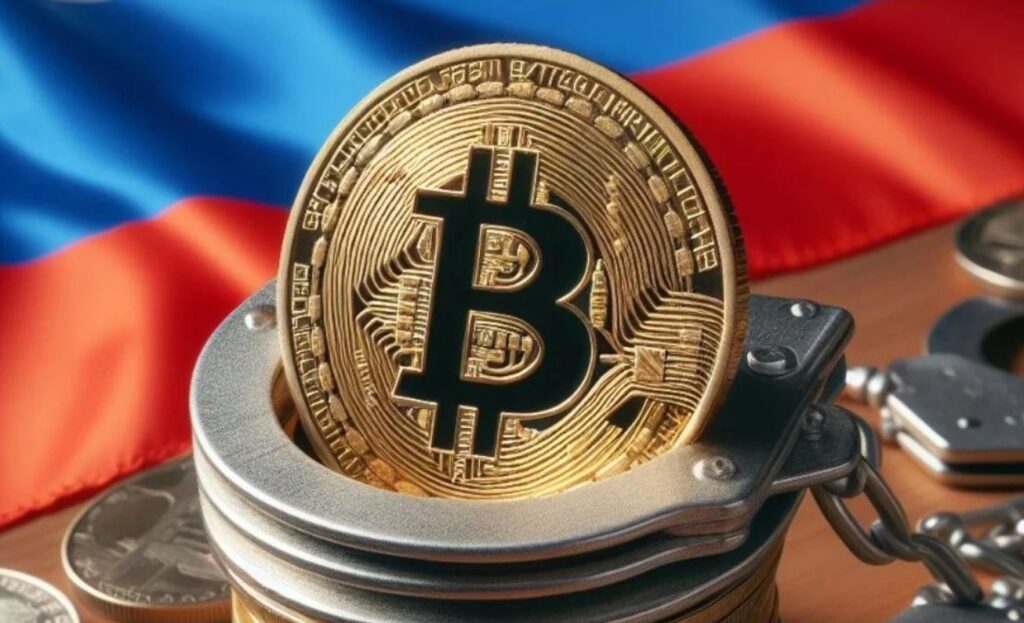
A few years ago, a Russian trader told me something that stuck. “You can mine Bitcoin here, trade it here, even hold a lot of it. Just don’t try to pay for dinner with it.” At the time, it sounded like sarcasm. Now it sounds like official policy.
Russia has drawn a clear line on crypto payments. Bitcoin and other cryptocurrencies will not be allowed as money inside the country. Not for groceries, not for rent, not for services. Lawmakers say crypto can exist in Russia, but only as an investment tool, not as a replacement for the ruble.
Only the Ruble Counts as Money
That position was reinforced by Anatoly Aksakov, the chairman of the State Duma’s Committee on Financial Markets and one of the main architects of Russia’s crypto laws. Speaking to state media, Aksakov said Russians will never be permitted to use Bitcoin, Ethereum, or any other digital asset to pay for goods or services.
According to him, any form of payment inside Russia must be made in rubles. There will be no exceptions. Cryptocurrencies will not be recognized as legal money under any circumstances. Lawmakers see them as speculative assets that can be bought, sold, or held, but not spent in daily life.
The Central Bank Has Always Pushed Back
This hard stance did not appear overnight. The Bank of Russia has long been the most vocal opponent of crypto payments. Its governor, Elvira Nabiullina, has repeatedly called for strict limits on crypto activity and has at times supported bans on trading, exchanges, and even mining.
That resistance shaped Russia’s 2020 law, which officially outlawed cryptocurrency payments. Since then, disagreements have played out behind the scenes. The central bank favored an almost complete ban, similar to China’s approach, while the finance ministry argued for regulation, oversight, and taxation instead.
For years, those competing views slowed progress and left the industry in a gray zone. But on one point, there is now full agreement. Crypto will not be used as money inside Russia.
Crypto Still Has a Role, Just Not at the Checkout
Despite the ban on payments, Russia has not turned its back on crypto entirely. In fact, officials have openly acknowledged that Russian companies have already used cryptocurrencies to settle billions of dollars in cross-border trade.
Even President Vladimir Putin has spoken positively about the country’s crypto mining industry, pointing to Russia’s energy advantages and growing role in global mining. Major banks have also noted rising interest from customers who want exposure to digital assets, even if they cannot spend them locally.
The message is pragmatic. Crypto can be useful. It can move value across borders. It can support mining and investment activity. It just cannot replace the ruble in everyday transactions.
Regulation Comes Before Freedom
Recent comments from policymakers suggest the focus is now on control rather than adoption. Evgeny Masharov, a member of the Civic Chamber’s regulatory commission, has argued that proper regulation could help increase government revenue and make it easier to fight fraud and money laundering.
That approach fits Russia’s broader strategy. Watch the market closely. Tax it where possible. Keep it within strict boundaries.
The Big Picture
Russia is not rejecting crypto. It is setting strict limits on what crypto is allowed to be.
You can own Bitcoin. You can trade it. You can mine it. You can even use it quietly for international settlements.
But when it comes time to pay inside the country, the rule is simple and unlikely to change. The ruble is the only money that counts.