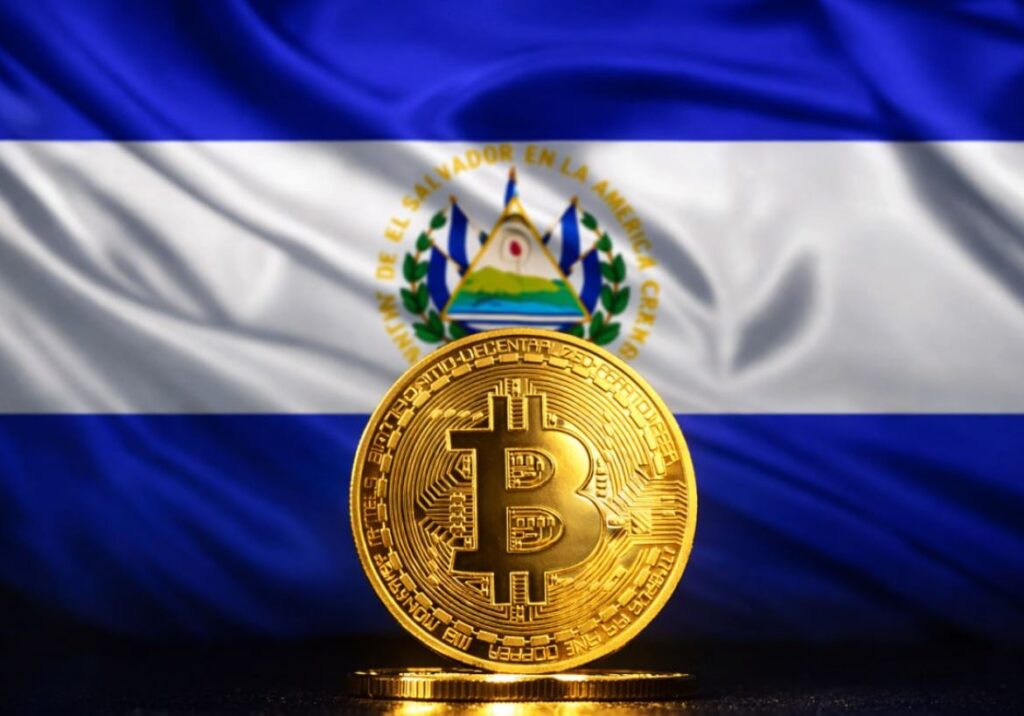
El Salvador is making headlines—and not just for its bold Bitcoin strategy. The country now holds 7,509 Bitcoin, valued at around $660 million, after buying over 1,000 Bitcoin in November alone. This aggressive crypto acquisition hasn’t gone unnoticed: the International Monetary Fund (IMF) praised the nation’s stronger-than-expected economic growth, projecting real GDP growth of roughly 4%.
LATEST: 🇸🇻 The IMF praised El Salvador’s stronger-than-expected economic growth, projecting real GDP near 4%, and said talks over selling the government’s Chivo $Bitcoin wallet are well advanced. pic.twitter.com/pjmKm8SIi0
— Aman 👻 (@Im_Aman2) December 24, 2025
What’s remarkable? The IMF didn’t hint at any halt to El Salvador’s Bitcoin strategy. Despite earlier talks tied to an IMF loan package, President Nayib Bukele is doubling down on crypto, keeping the momentum alive.
In November, the government deviated from its usual approach of buying one Bitcoin per day, instead snapping up 1,090 Bitcoin worth $100 million during a market dip—a move signaling confidence in long-term growth. And the outlook for 2026? The IMF says it’s “very good.”
Negotiations are also underway for the sale of the government’s Chivo crypto wallet, with the IMF emphasizing the need for transparency, public resource protection, and risk mitigation in ongoing Bitcoin projects.
Earlier this year, in March, El Salvador secured a $3.5 billion IMF loan package. Discussions with Salvadoran authorities continue to fine-tune policies and reforms necessary for the second review of the EFF program.
So why is this important? El Salvador’s economy is outperforming expectations thanks to higher investor confidence, record remittances, and a surge in investment. While the IMF is closely watching the Bitcoin angle, the country’s growth story is clear: bold moves are paying off.
Some context: A May agreement with the IMF included a $120 million payment as part of a $1.4 billion 2024 loan, with the government expected to pause Bitcoin acquisitions. Yet, President Bukele’s team continues to announce purchases, showing a persistent commitment to crypto as legal tender since 2021.
The bottom line: El Salvador isn’t just embracing Bitcoin—it’s leveraging it as part of a larger strategy to boost the economy, attract investment, and innovate in public finance. The IMF’s praise signals confidence, but the real story is how this small nation is redefining economic growth in the crypto era.