
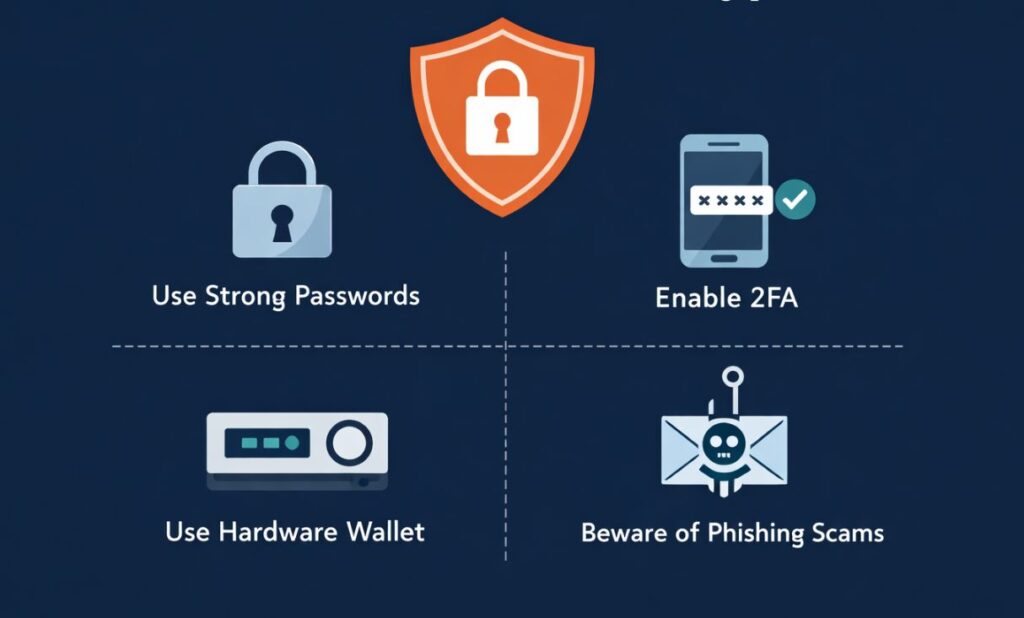
Explore Ways to Protect Your Crypto in 2025: Essential Methods and Innovations
Cryptocurrency theft reached $2.47 billion in the first half of 2025 alone, surpassing all of 2024’s losses, with wallet compromises accounting for $1.7 billion. As hacks, phishing, and scams evolve, protecting digital assets demands layered strategies combining traditional tools and cutting-edge tech.
This article outlines proven methods with pros and cons, plus innovative approaches to secure holdings effectively.
Core Protection Methods
Hardware Wallets (Cold Storage)
Hardware wallets store private keys offline on devices like Ledger Nano X or Trezor Model T, immune to online hacks. The market hit $472 million in 2025, growing at 36.5% CAGR to $2.9 billion by 2032, driven by institutional demand.
Pros: Near-total protection from remote attacks; supports 6,000+ assets; recovery via seed phrases.
Cons: Physical loss or damage risks; setup complexity for beginners; costs $50–$400.
Read More: Best Hardware Crypto Wallets
Software Wallets (Hot Wallets)
Hot wallets like MetaMask or Trust Wallet enable quick dApp access but connect online.
Pros: High convenience for trading; free or low-cost; multichain support.
Cons: Vulnerable to malware, phishing; 69% of users prefer them despite risks.
Read More: Best Software Crypto Wallets
Multi-Signature (Multisig) Wallets
Multisig requires 2+ approvals (e.g., 2-of-3) for transactions, using setups like Electrum or Armory.
Pros: No single failure point; ideal for teams; on-chain security.
Cons: Coordination delays; higher fees; scalability issues for large groups.
| Method | Security Level | Convenience | Cost | Best For |
|---|---|---|---|---|
| Hardware | High (Offline) | Low | Medium | HODLers |
| Software | Medium | High | Low | Traders |
| Multisig | High | Medium | Low | Groups |
Advanced Security Practices
Enable 2FA with hardware keys like YubiKey over SMS or TOTP, which resist SIM swaps and phishing. Use FIDO2/WebAuthn for phishing-proof logins. Triple-verify addresses, segregate wallets (90% in cold storage), and whitelist approved ones. Keep software updated, employ firewalls/IDS, and avoid unsolicited links—phishing stole $410 million in H1 2025.
Pros of Practices: Low cost; immediate impact; reduces 70% of common attacks.
Cons: User error persists; requires discipline.
Innovative Ways to Secure Crypto
MPC (Multi-Party Computation) wallets split keys into shards across devices, never reconstructing fully—eliminating seed phrases. Zengo and Safeheron lead, offering seedless recovery via biometrics/social guardians.
Pros: Blockchain-agnostic; scalable; AI fraud detection in real-time.
Cons: Cloud reliance for recovery; emerging tech risks.
Account Abstraction (AA) via EIP-4337/7702 creates smart contract wallets with gasless txns, batching, and programmable rules—no EOAs needed.
Pros: Custom logic (e.g., spending limits); session keys for dApps; Ethereum-native.
Cons: Chain-specific; smart contract bugs possible.
AI Tools like ScamMinder analyze blockchain patterns for risk scores; Chainalysis flags suspicious txns. Lukka’s AML monitors in real-time.
Pros: Proactive scam detection; user-friendly interfaces.
Cons: False positives; data privacy concerns.
Seedless MPC with AI recovery combines shards, biometrics, and guardians—recover via trusted contacts without phrases.
| Innovation | Mechanism | Pros | Cons |
|---|---|---|---|
| MPC | Key sharding | No single failure; flexible | Complex setup |
| AA | Smart accounts | Programmable UX | Gas costs initially |
| AI Detection | Pattern analysis | Real-time alerts | Subscription fees |
Comparison: Traditional vs. Innovative
Building a Defense Strategy
Follow the 90/10 rule: 90% in hardware/MPC cold storage, 10% in hot for liquidity. Diversify across wallets; insure via custodians if institutional. Test recoveries annually; use VPNs/firewalls; stay skeptical of “guaranteed returns.” For enterprises, add environmental safeguards like fire suppression.
In 2025, blending hardware, multisig, and innovations like MPC/AA counters evolving threats—Ethereum saw $1.5B stolen. Proactive users minimize risks in a $2.5B hack landscape. (Word count: 1498)